 +91 9131509957
  info@rishikulyogshala.org




The Incredible Health Benefits of Hasta Uttanasana (Raised Arm Backbend Pose)
Hasta Uttanasana is a great way to start if you want a yoga pose that will give you more energy and help you stand up straighter. This backbend with your arms raised strengthens your spine, opens up your lungs, and relaxes your upper body. You will learn what the pose means, where it came from, how to do it step by step, and how it can help your health in this blog. By the end, you’ll know exactly how this easy move can change your breathing, your posture, and your health in general.
What is Hasta Uttanasana (Raised Arm Backbend Pose) in Yoga?
The Hasta Uttanasana (Raised Arms Pose) is a fundamental posture within the Sun Salutation series. Practitioners use this pose to warm up the body, strengthen the spine, and open the chest for deeper breaths. It also helps improve balance and flexibility, while relieving tension in the upper body. By aligning the body properly, this pose encourages proper posture, enhances lung capacity, and prepares the mind for meditation and focused practice.
Origin of Hasta Uttanasana
The name Hasta Uttanasana comes from Sanskrit:
- Hasta: Hand
- Uttana: Intense stretch
- Asana: Pose
This combination reflects the significant stretching benefits that this pose provides.
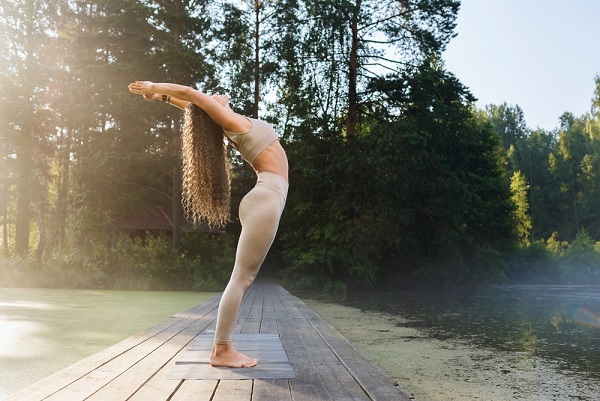
How to Perform Hasta Uttanasana
Follow these Hasta Uttanasana steps to perform the pose correctly.
- Start Position: Stand on a yoga mat with your legs straight, arms by your sides, spine elongated, and feet together.
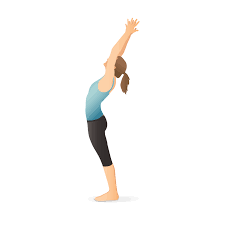
- Raise Arms: Lengthen your spine and stretch your arms above shoulder-width apart.
- Join Hands: Softly bring your hands together.
- Backbend: Slightly tilt your upper body backward and gaze up at your thumbs.
- Avoid Strain: As you tilt your head and neck back, ensure you do not strain them.
- Finish: Exhale, lower your arms, and return to Tadasana (Mountain Pose).
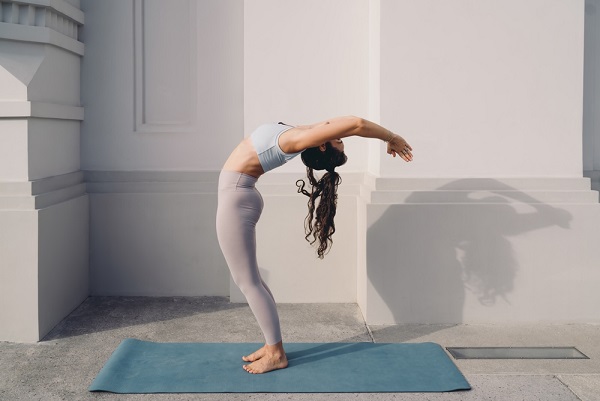
Variation: Hasta Uttanasana B (Raised Arm Backbend Pose)
- Begin: Stand in Parvatasana (Mountain Pose).
- Inhale: Sweep your arms up and keep them straight.
- Mudra: Bring your hands together in Anjali Mudra.
- Backbend: Bend your upper body into a backbend, allowing the hips to move forward.
- Stretch: Extend your arms back into the backbend.
- Comfort: Stretch to your comfort level; do not overextend.
- Release: Exit the pose as feels right for you.
Also Read: Top 7 Health Benefits of Uttanasana (Standing Forward Bend Pose)
Health Benefits of Hasta Uttanasana
Lets us discuss some hasta uttanasana benefits:
- Expands and Opens the Chest: The pose helps expand the rib cage and heart, facilitating deeper breaths and increased oxygen flow. During the Sun Salutation series, this pose aligns with the 11th position to honor the sun, enhancing the heart’s receptiveness to divine energy.
- Tones the Back Muscles: As a counterpose to forward bends, the slight upper body bend and deeper backbend in its variation stretch and tone the back muscles, aiding in muscle health and relieving tension.
- Balances the Anahata Chakra: Opening the chest activates and balances the Anahata (Heart Chakra), promoting bliss, love, empathy, and harmony.
- Works on Abdominal Organs and Muscles: The backbend stretches and tones the abdominal organs and muscles, improving digestion and abdominal health.
- Calms the Brain: Enhanced breathing and blood flow from the pose activate the parasympathetic nervous system, promoting relaxation and calmness.
- Induces a Meditative State: The pose, especially with Anjali Mudra, encourages a meditative state, fostering awareness and a deep sense of calm.
Read More – Hand to Big Toe Pose (Utthita Hasta Padangustasana) – Top 10 health benefits
Conclusion
Hasta Uttanasana offers a multitude of physical and mental benefits, making it a valuable part of any yoga practice. From expanding the chest and toning the back muscles to balancing the heart chakra and calming the mind, this pose supports overall well-being. Regular practice of Hasta Uttanasana also enhances flexibility, improves posture, and strengthens the core. It promotes better circulation and energy flow throughout the body, helping to alleviate tension and reduce stress. Incorporating this pose into your routine can uplift both body and mind.
At Rishikul Yogshala, we emphasize understanding and practicing such foundational poses as part of our 200 Hour Yoga Teacher Training in India. Whether you are deepening your personal practice or training to become a certified yoga teacher, learning the correct alignment, benefits, and techniques of poses like Hasta Uttanasana ensures a safe, effective, and transformative yoga journey.
FAQ – Frequently Asked Questions About Hasta Uttanasana
Q1. Is Hasta Uttanasana good for beginners?
Ans. Yes — it’s a beginner‑friendly standing backbend that is commonly included in Sun Salutations.
Q2. How long should I hold Hasta Uttanasana?
Ans. Hold the pose for a few breaths, just long enough to feel a gentle stretch and opening in the chest.
Q3. What are the main benefits of this pose?
Ans. It helps open the chest, improve spinal strength, enhance lung capacity, tone abdominal organs, and calm the mind.
Q4. Are there any risks or precautions?
Ans. Avoid or modify this pose if you have lower back pain, neck issues, or feel dizziness when bending backward.
Q5. How do I come out of the pose safely?
Ans. Exhale and lower your arms slowly while keeping your spine long, then return to a neutral standing position.
Q6. Should I synchronize breath with movement here?
Ans. Yes — inhale while lifting your arms up and gently arching your back, and exhale as you lower your arms.
Q7. Can I use this pose as a warm-up?
Ans. Absolutely — it’s ideal in warm-up sequences like Sun Salutations to prepare the body for more active asanas.
Q8. What variation can I try if I want a deeper stretch?
Ans. You can try the backbend variation (sometimes called Hasta Uttanasana B) by bringing your hands into Anjali Mudra and leaning your upper body further back, as long as it feels comfortable and safe.
Last Updated On: 19-11-2025

Lead Teacher in Yoga Philosophy, Pranayama, Meditation, Kundalini and Therapeutic Applications of Yoga
Born into a traditional spiritual home, Krishna spent over a decade climbing the corporate ladder at Capgemini and Morgan Stanley worldwide; before quitting them to explore the purpose of life. He set forth on a spiritual quest, Learning and Experiencing Yoga with Great Yogis and Spiritual Masters of the Modern World. Krishna's teachings comprises of the ancient practices of yoga through modern scientific reasoning. He specializes in Yoga Philosophy, Pranayama, Meditation, Kundalini and Therapeutic Applications of Yoga. Connect with your true nature and experience the mystical dimensions of yoga in conversation with Krishna.
View Instagram Profile

- What Are Healing Frequencies? Understanding the Power of Sound and Vibration

- Solar Plexus Chakra: What It Does, Where It Is, and How to Balance It?
- Om Shanti Mantra: Meaning, History & Its Deep Connection With Yoga
- Ujjayi Pranayama: Steps, Benefits & How to Practice

- Is 200 Hour Yoga Teacher Training Course Enough to Build a Successful Teaching Career?